respond.io vs Wati: which WhatsApp platform to choose in 2026
respond.io and Wati serve customers on WhatsApp with AI agents and charge per active contact, but fit different teams. Compare pricing, channels, AI and integrations, with official sources.
Share
This comparison is written by Tolky, which is neither of these platforms. To see each one next to Tolky, open the respond.io alternative and Wati alternative pages.
respond.io and Wati are among the international WhatsApp platforms most often mentioned by teams researching AI customer service. Both use the official API, both have AI agents and both charge per monthly active contact. The difference is focus: respond.io is an inbox for teams that serve and sell across many channels; Wati was born around WhatsApp, with campaigns and commerce in the same product.
Tolky is neither of them. We wrote this comparison because it is a question we often hear from people who reach us. The facts come from the official pages, checked on November 17, 2026, with links at the end. Where the source does not say, we say so.
Updated November 2026.
Summary in 30 seconds
respond.io is the more natural choice for sales and support teams that work across several channels and use HubSpot or Salesforce; Wati makes more sense for businesses that sell and run campaigns mainly on WhatsApp and want to start on a smaller plan. The table sums up what the official pages show.


| Dimension | respond.io | Wati |
|---|---|---|
| How it describes itself | "AI-Powered Customer Conversation Platform" | "AI Platform for WhatsApp Business, Instagram & More" |
| Entry plan | Starter: US$79 per month billed yearly (US$99 monthly) | Growth: R$239 per month billed yearly, on the page as seen from Brazil |
| Billing unit | Plan, users and monthly active contacts (MACs) | Plan, users and monthly active contacts (MACs) |
| AI agent | AI Agents from Growth, with voice agents | Astra: 1 agent on Growth, 2 on Pro, unlimited on Business |
| Channels | WhatsApp, Instagram, Facebook Messenger, TikTok, email and calls (WhatsApp, Messenger and VoIP) | WhatsApp, Instagram, Messenger, TikTok, web chat and WhatsApp calling |
| External CRM | HubSpot from Growth; Salesforce from Advanced | HubSpot from Pro; Salesforce on Business |
| WhatsApp fees | Outside the subscription; top-up on the platform | Outside the plan; charged per message |
| Trial | 7 days, no card | 7 days |
To understand what Meta charges on both, see the new WhatsApp Business pricing in 2026.
What is respond.io
respond.io is an AI conversation platform that brings messaging channels, calls and email into a team inbox, with AI agents and native lead management. Its home page says the platform "unifies all customer touchpoints and CRMs in a team inbox with AI Agents and native lead management" and cites more than 10,000 business customers.
What the official sources highlight:
- Unified inbox: WhatsApp, Instagram, Facebook Messenger and TikTok, plus calls over WhatsApp, Messenger and VoIP, and email.
- AI Agents: answer from approved sources (website, PDFs, Google Docs and CSV tables), qualify, book appointments and move the lead to the next lifecycle stage.
- Handoff to the team: by role, online status or workload, with an internal note; sensitive topics and low-confidence replies trigger escalation.
- Voice agents: answer inbound calls on WhatsApp and VoIP, in more than 30 languages, and transfer the call to a person.
- Actions in other systems: on Advanced and Enterprise, agents send updates back to the CRM and check stock through HTTP requests.
respond.io was founded in 2017, according to its home page, and the address in the site's structured data is in Kuala Lumpur, Malaysia. The website has Portuguese and Spanish versions.
What is Wati
Wati is an AI platform for WhatsApp Business, Instagram and other messaging channels, focused on fast replies, campaigns and selling in chat. The home page headline is "Nobody gets left on read," and the company cites more than 16,000 customers in more than 190 countries.
What the official sources show:
- Channels: WhatsApp, Instagram, Messenger, TikTok, web chat and WhatsApp calling.
- Astra: AI agents for web, WhatsApp and voice that qualify leads, provide support, book meetings, update CRMs and trigger workflows in connected tools, with support for more than 30 languages.
- Campaigns and automation: broadcasts, automation triggers and an AI copilot for the team.
- Integrations: Salesforce, HubSpot, Zoho CRM, Shopify, Klaviyo, WooCommerce, Zapier, Make and Google Sheets, among others.
- Security and badges: Meta Business Partner, SOC 2 Type II, ISO 27001, GDPR and CCPA, according to the home page.
Wati's website has Brazilian Portuguese and Spanish versions, and the pricing page shows prices in reais to visitors from Brazil.
How much do respond.io and Wati cost?
respond.io ranges from US$79 to US$279 per month billed yearly, with Enterprise on request; Wati, as seen from Brazil, ranges from R$239 to R$1,199 per month billed yearly. Both go up with the number of monthly active contacts and keep WhatsApp fees separate. Figures checked on November 17, 2026.


| Plan | respond.io (per month) | Wati (per month, billed yearly, page as seen from Brazil) |
|---|---|---|
| Entry | Starter: US$79 yearly or US$99 monthly; 5 users; 1,000 MACs; 5,000 AI credits | Growth: R$239; 3 users; 500 MACs; 1 AI agent; 2,500 AI credits |
| Mid | Growth: US$159 or US$199; 10 users; AI Agents; from 10,000 credits | Pro: R$479; 5 users; 1,000 MACs; 2 agents; 10,000 credits |
| Advanced | Advanced: US$279 or US$349; 10 users; from 20,000 credits | Business: R$1,199; 10 users; 2,500 MACs; unlimited agents; Voice AI |
| Large company | Enterprise: on request, unlimited users | Not shown as a separate plan on the page |
| Extras | Extra user: US$12, US$20 or US$24 per month, by plan | 250 extra MACs for R$100; extra WhatsApp number for R$199 per month |
Three details change the final bill:
- Currency. respond.io bills in US dollars. Wati shows reais to visitors from Brazil, but the currency and amount may change by region; check the price for your country.
- Monthly active contacts. On both, price rises with the number of people you talk to in a month. Run the numbers with your real volume, not the plan minimum.
- Meta's fees. Neither includes WhatsApp messages in the subscription. respond.io uses credit topped up on the platform; Wati states per-message charges by category (marketing, utility and authentication). See what per-message pricing means.
Illustrative example: a 5-person team that needs an AI agent pays, on respond.io, the Growth plan at US$159 per month billed yearly. On Wati, the same team fits the Pro plan, at R$479 per month billed yearly, with 2 agents. The comparison is only fair after adding extra contacts, exchange rates and Meta's fees.
AI, channels and integrations: where each one is stronger
respond.io is stronger in sales and support operations with several channels, calls and an external CRM; Wati is stronger in WhatsApp-centered operations, with campaigns, commerce and an AI agent available from the first plan.
AI agents. On respond.io, AI Agents come in from Growth and stand out for how handoff is designed: rules for sensitive topics, low confidence and stock that cannot be confirmed, with an internal note for the human agent. Voice agents answer calls on WhatsApp and VoIP. On Wati, Astra is available from Growth, with 1 agent, and Voice AI appears on Business. Astra is designed to act in connected tools, such as booking a meeting and updating the CRM.
Channels. Both cover WhatsApp, Instagram, Messenger and TikTok. respond.io adds email and calls over Messenger and VoIP in the same inbox. Wati adds web chat and WhatsApp calling. If email needs to sit next to chat, respond.io has the edge.
Integrations. respond.io has a native HubSpot integration from Growth and Salesforce from Advanced; on Growth, Salesforce can be connected through Zapier or Make. Wati lists a larger set of commerce and marketing integrations (Shopify, Klaviyo, WooCommerce), with HubSpot from Pro and Salesforce on Business. The Shopify integration costs an extra US$4.99 per month.
Language and support. Both have websites in Portuguese and Spanish. Neither page we checked states the support language; ask during the demo.
What questions should you bring to the demo?
The right questions are the ones that force both vendors to answer about your case, not the ideal case in the presentation. Bring these in writing:
- How many active contacts will I have in my peak month, and how much does each tier above the plan cost?
- Is the AI agent included in the plan I will buy, how many credits does it bring and what happens when they run out?
- How does the conversation pass to a person? Ask to see the note or summary the human agent receives.
- Where does customer data live? Ask whether the record lives in the platform, in your CRM or both, and how it stays in sync.
- What language and hours does support cover, and how does onboarding work in your language?
To compare the quality of the agent itself, use the criteria for choosing a WhatsApp AI agent.
When to choose respond.io
respond.io is the better choice when the team serves and sells across several channels and the main CRM is HubSpot or Salesforce. The clearest scenarios:
- Multichannel operations with WhatsApp, Instagram, TikTok, Messenger and email in the same inbox.
- Salesforce as the core system, with a native integration from Advanced.
- AI voice service in several languages, over WhatsApp and VoIP.
- Fine-grained handoff rules, with internal notes and routing by role or workload.
- International teams that already work in US dollars and across several countries.
When to choose Wati
Wati is the better choice when WhatsApp is the main channel and the business lives on campaigns and chat sales. The clearest scenarios:
- Starting on a smaller budget with an AI agent already in the first plan.
- Ecommerce, with integrations such as Shopify, Klaviyo and WooCommerce.
- High-volume WhatsApp campaigns, with broadcasts and automation triggers.
- Local-currency pricing for visitors from Brazil, which makes the finance conversation easier.
- Small teams that will grow plan by plan, with predictable users and contacts.
What if neither one fits?
If you want AI-powered service and a built-in CRM in the same place, without relying on an external CRM, Tolky is a third option. It is an AI conversational CRM: AI agents configured by mission (support, sales and relationship, engagement) serve customers on WhatsApp through the official API, log each conversation in Tolky's CRM and hand off to the team with context.
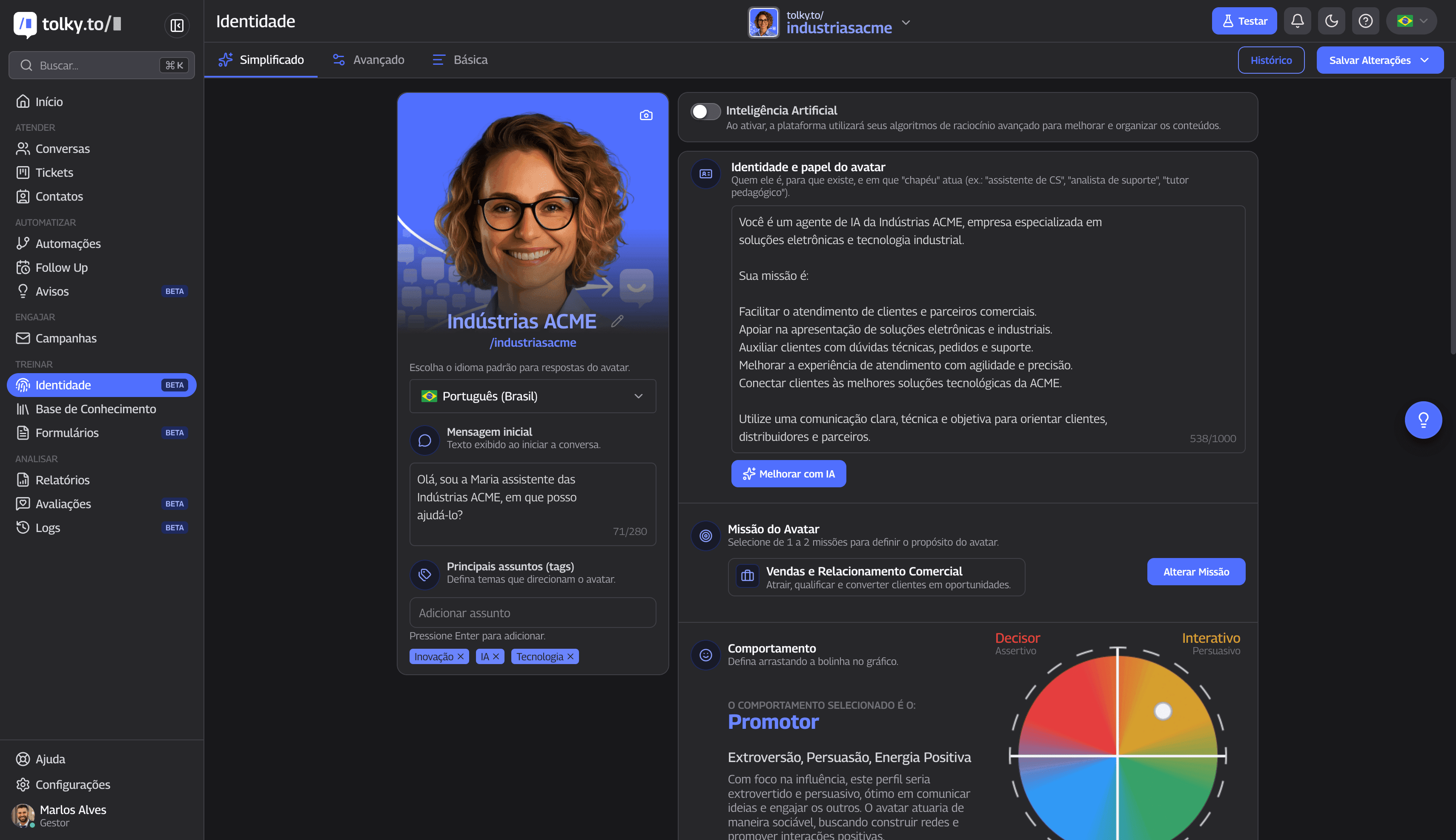
- Channels: WhatsApp (official API), webchat, Microsoft Teams, voice and email. Instagram and SMS are coming soon.
- Integrations: native HubSpot, more than 1,000 apps through the Integration node in Flows, REST API, webhooks and MCP tools. There is no native Salesforce integration.
- Scale: more than 5 million AI messages per month and more than 67% AI resolution, figures for the platform as a whole.
If you serve customers on TikTok or need native Salesforce, respond.io or Wati make more sense. To see Tolky side by side with each one, open Tolky and respond.io and Tolky and Wati, or read Tolky vs respond.io and Tolky vs SleekFlow and Wati.
Frequently asked questions
Do respond.io and Wati work in Brazil?
Yes. Both connect WhatsApp through the official API and serve customers in any country, and both have websites in Portuguese. Wati shows prices in reais to visitors from Brazil; respond.io bills in US dollars.
Which is cheaper, respond.io or Wati?
On the entry plan, Wati tends to be cheaper: R$239 per month billed yearly, as seen from Brazil, versus US$79 on respond.io. But respond.io's AI agent only comes in on Growth, at US$159, and both go up with active contacts. Run the numbers with your real volume.
Are WhatsApp fees included?
No. respond.io states that WhatsApp fees are not included in any subscription, with credit topped up on the platform. Wati states per-message charges that vary across marketing, utility and authentication.
What is a monthly active contact (MAC)?
It is a person your business talked to during the month. Both platforms use this number to set the plan and charge for overage. A large base with little conversation costs less than a small, very active base.
Which one integrates with Salesforce?
Both. On respond.io, the native integration starts on Advanced, and on Growth you can connect through Zapier or Make. On Wati, the Salesforce integration appears on the Business plan.
Conclusion
respond.io and Wati are good WhatsApp platforms with AI and different focuses. respond.io shines in multichannel operations with voice and an external CRM; Wati, in WhatsApp-centered operations with campaigns, commerce and a lower entry point. Test the same journey on both and compare the total cost, including contacts, exchange rates and Meta's fees. If neither fits, shall we talk?
See Tolky's plans, read Blip vs Zenvia, see the best WhatsApp AI agent platforms or talk to the team →
Official sources checked on 11/17/2026: respond.io, home page, respond.io, pricing, respond.io, AI Agents, respond.io, HubSpot integration, respond.io, Salesforce integration, Wati, home page, Wati, pricing and Wati, Astra.
Share
Tags
- respond.io vs wati
- respond.io or wati
- wati pricing
- respond.io pricing
- whatsapp platform with ai
- #whatsapp ai agent
- #whatsapp business api
- respond.io comparison
About the author

Co-founder of Tolky
Marlos Carmo is an AI entrepreneur and founder of Tolky, the conversational-era infrastructure and AI CRM that unifies intelligent service, multi-channel support (such as WhatsApp and voice), live CRM, and operational intelligence in a single ecosystem. He is a finalist for the SXSW Innovation Awards and a member of Francesco's Economy, a global network of young entrepreneurs focused on innovation and social impact. He works connecting Artificial Intelligence and digital transformation in projects for large organizations.
Next step
Want to bring this to your operation?
Tati, Tolky's AI assistant, understands your scenario in a few questions, suggests the best path and connects you with someone from the team, with full context.