Tolkyvs Manychat
Compare Tolky and Manychat for messaging campaigns, lead qualification, AI Step, and CRM integration.

Tolky
AI CRM

Manychat
Messaging automation
Conversational AI CRM
Which fits your operation?
Consider Tolky if…
You want to manage customer service, conversation history, and CRM in one platform.
You sell or support customers over WhatsApp with a mix of AI and human service.
You want to size your plan around monthly service volume and team capacity.
Consider Manychat if…
Comments, direct messages, and social campaigns are your main points of entry.
Your team wants visual automations and uses AI Step where a flow needs flexible replies.
Feature comparison
Check the plan, region, and add-ons required to run the same scenario on both platforms.
Criterion
Tolky
Manychat
Focus
Customer service, sales, and conversational CRM in one workspace.
Messaging marketing automation with social triggers and lead capture flows.
AI agents
Configurable agents answer questions, qualify leads, look up data, and take permitted actions.
AI Step follows instructions, responds, and collects data within a Flow Builder automation.
Service channels
WhatsApp through the official API, webchat, Microsoft Teams and voice (WhatsApp, web and telephony on activation). Instagram coming soon.
Instagram, WhatsApp, Messenger, and other messaging channels, depending on the plan.
CRM updates
The Tolky CRM is updated during the conversation. Native HubSpot integration and 1,000+ apps through the Integration node in Flows.
Contact profiles, tags, and custom fields. Integrations can feed your existing sales CRM.
Human handoff
Your team can take over with access to the conversation history. Queue and department features vary by plan.
Inbox allows teammates to follow and take over conversations, depending on the plan and setup.
Billing model
Billed per conversation, with a free plan and plans with monthly conversation allowances and user seats. Meta’s WhatsApp charges are separate.
New plans use monthly Active Contact allowances. Legacy accounts and regions can have different terms.
Official sources checked on November 15, 2026
What to test in a pilot
Trigger a DM from a comment and qualify a contact. Check what reaches your CRM, how the teammate gets the context, and how the contact counts toward billing.
Tolky in action
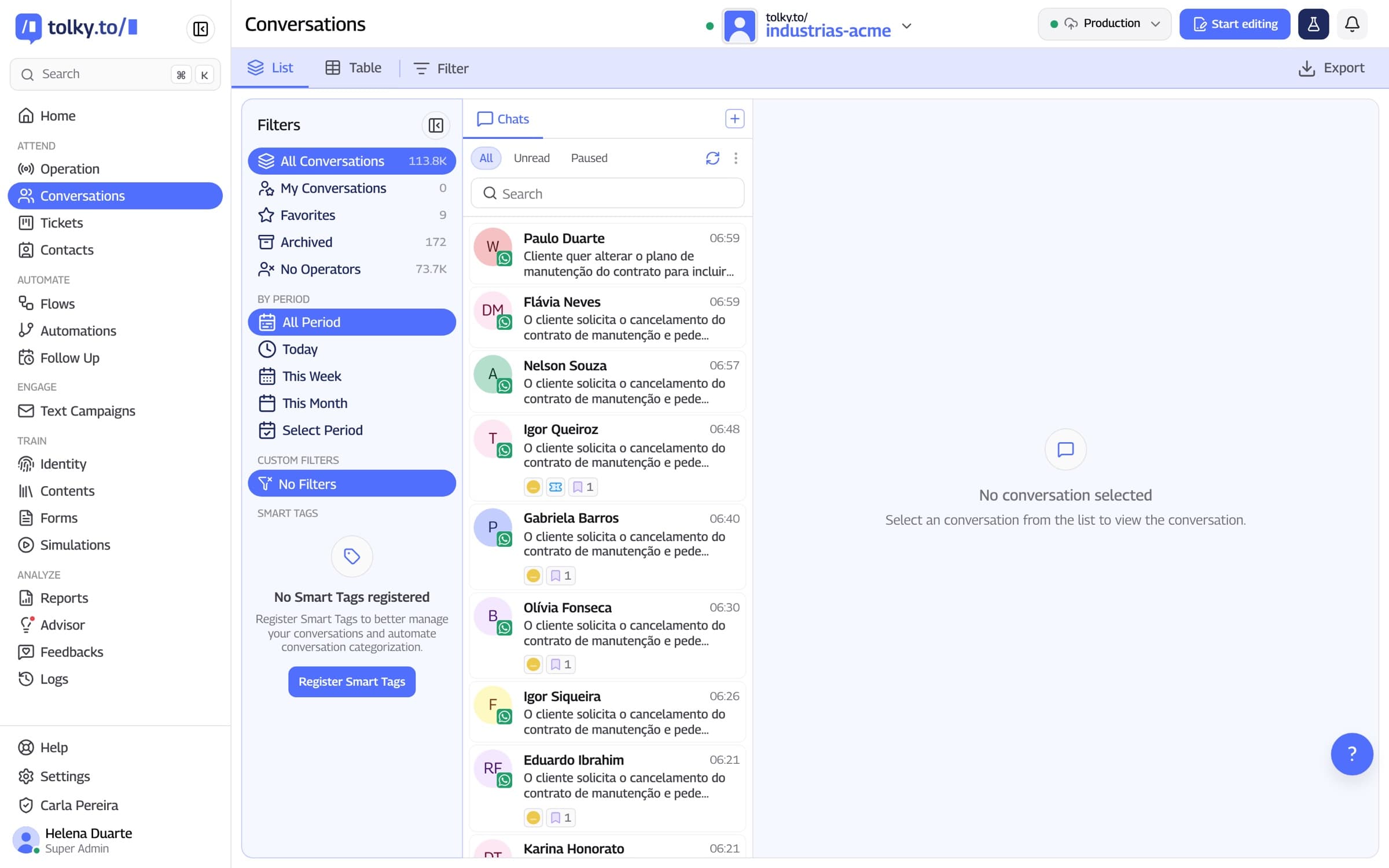
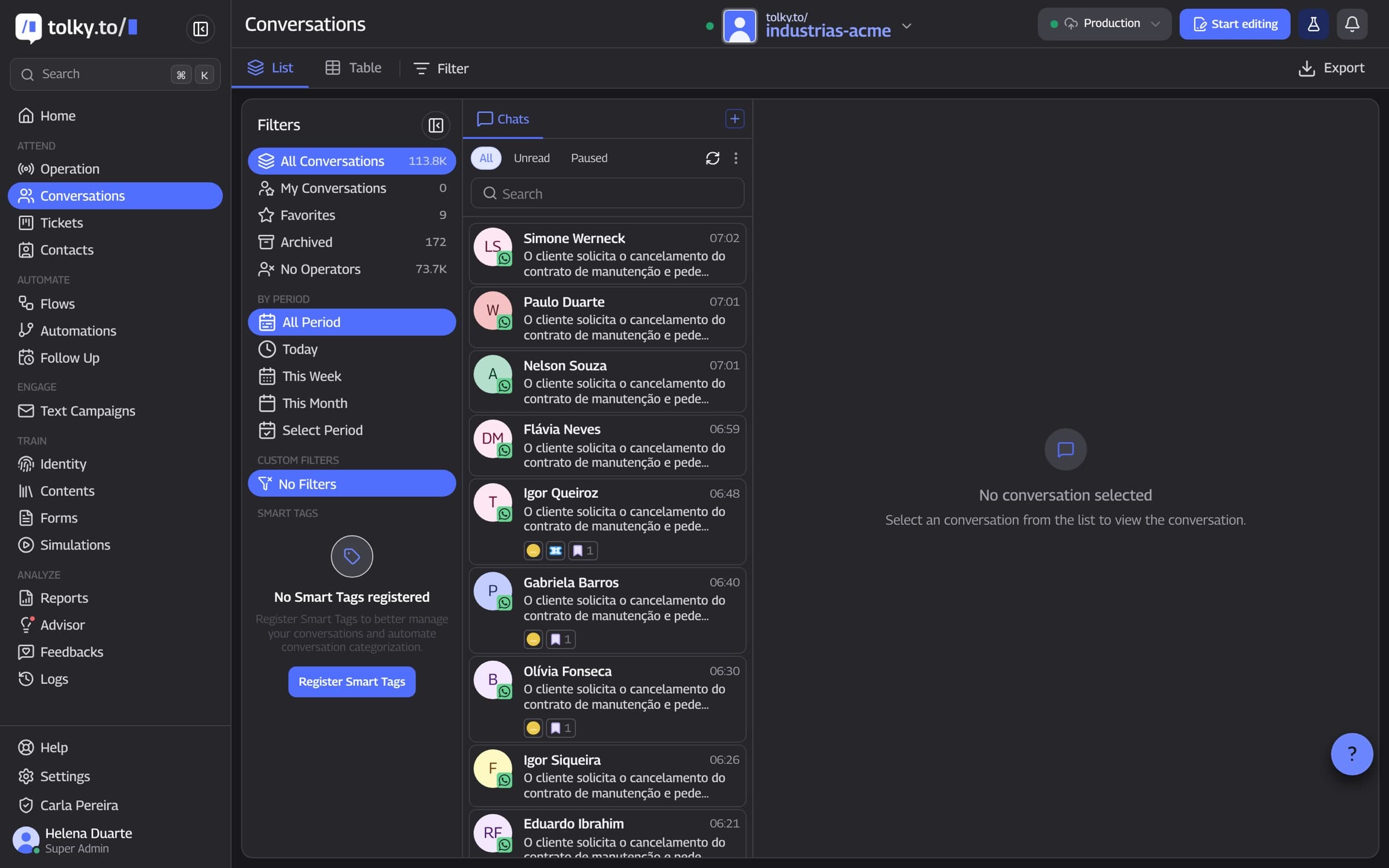
Screenshot of the Tolky platform
How to plan the transition
Start with your highest-impact workflow. Validate the data, integrations, and channels before moving production traffic.
- 1
Inventory
List your channels, flows, templates, data, and integrations. Check what you can export.
- 2
Configuration
Define permitted actions, escalation rules, and which system will own each field.
- 3
Pilot
Start with a low-risk segment. Validate history, permissions, CRM updates, and human handoff.
- 4
Expansion
Increase volume once you have validated the results. Plan a rollback before switching your main number.
Frequently asked questions
Yes. AI Step uses goals, tasks, and context to respond and collect information within an automation. Supported channels include Instagram and WhatsApp.
On new plans the allowance includes contacts who interact during the billing cycle. Check the overage terms and model available to your account and region.
More comparisons

Tolky vs Blip
Conversational service

Tolky vs Zenvia
Omnichannel CX platform

Tolky vs Octadesk
Omnichannel service with AI

Tolky vs Leadster
AI lead generation

Tolky vs Respond.io
Multichannel inbox with AI

Tolky vs Wati
WhatsApp messaging and AI

Tolky vs SleekFlow
AI conversation suite

Tolky vs Huggy
Omnichannel digital customer service

Tolky vs HubSpot
CRM and marketing

Tolky vs Salesforce
Enterprise CRM

Tolky vs RD Station
Marketing, sales, and service

Tolky vs Kommo
Sales CRM for messaging

Tolky vs Intercom
AI agent for support

Tolky vs Zendesk
Help desk with AI agents

Tolky vs Sierra
AI agents for large enterprises

Tolky vs Decagon
AI agents for enterprise support

Tolky vs VTEX CX Platform
AI agents for e-commerce

Conversations aren't support.They're infrastructure.
Step into the new era of the relationship between companies and customers.