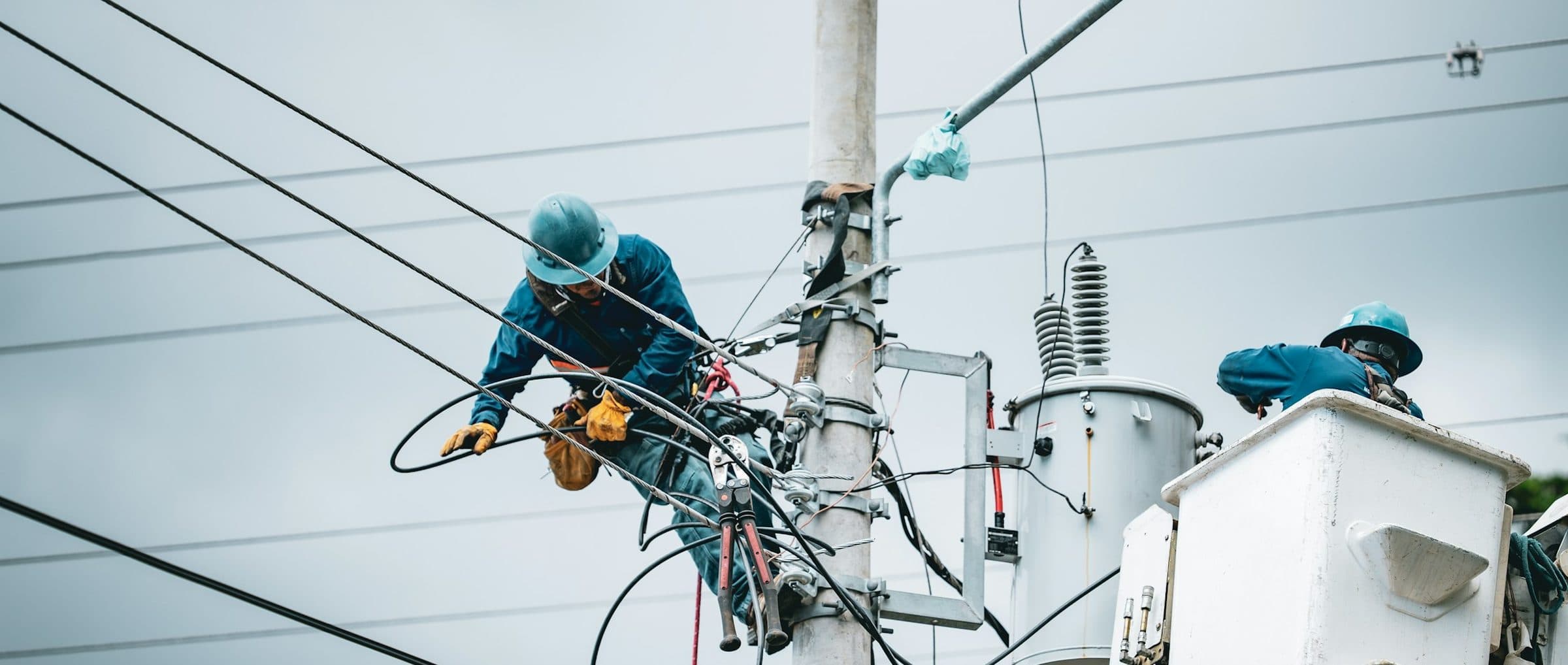
AI customer service for utilities,from outage to duplicate bill.
AI agents serve utility customers (power distributors, water and sewage companies and gas distributors) on WhatsApp, your website and voice: they log power or water outages, handle duplicate bills and reconnection, and hand off to the team with the history when a case needs a person.
Power distributor customer service
Sample conversation
Customer
My power has been out since 7:40 pm and my neighbor's too. I live at 120 Acacia Street.- AI agentI'll log it now. Can you send me the installation number? It's on your power bill. If there's a downed wire in the street, stay away from it and let me know.
Customer
It's 3004518872. I didn't see any downed wire.- AI agentDone, the outage is logged for your address. The field team already has an open incident in your neighborhood, and I'll let you know here when there's an estimate.
- Incident logged in the distributor's system through the integration
At a glance
- Channels
- Official WhatsApp, website and voice with a semantic IVR (upon activation)
- When the team steps in
- Electrical hazards, leaks, bill disputes and negotiation outside the rules
- Integration
- Billing system through Flows, REST API or webhooks
Drag to compare


The storm knocks out the power, and the customer calls, calls again and only gets a busy line.
On WhatsApp, she reports the outage, gets confirmation it was logged and follows up without waiting on the line.
What weighs on the operation
01
Peaks in storms and widespread outages
When power goes out or water stops across a whole neighborhood, thousands of customers contact the company at once, and the phone and WhatsApp back up.
02
Bills, duplicates and reconnection
Duplicate bills, due dates, balances, reconnection after payment and account holder changes repeat all day and tie the team up with routine work.
03
Protocol numbers and rules on every channel
In Brazil, ANEEL Normative Resolution No. 1,000/2021 requires integrated channels, a protocol number and a record of every request, and customers cannot be made to repeat a request when they switch channels.
From outage report to the field team
Step 01
The customer writes or calls
Power or water outage, duplicate bill, reconnection or new connection.
Step 02
The AI logs the incident
Address and unit number, with safety guidance.
Step 03
Bills and reconnection in the conversation
Duplicate bill, balance and status when the system is integrated.
Step 04
Notices before a shutoff
Due dates and planned maintenance by campaign, with conversation.
How Tolky helps
Power or water outages logged in the conversation
The AI takes the report, collects the address and unit number and shares what the company has already logged about the outage when that data is integrated. It answers many conversations at once, with no queue at peak.
Duplicate bills, balances and request status
With the billing system integrated through the Integration node in Flows, REST API or webhooks, the AI checks balances, sends the duplicate bill and reports reconnection status. Without integration, it collects the details and routes them.
Due date and planned shutoff notices
WhatsApp campaigns with Meta-approved templates, sent to opted-in customers, announce due dates and planned maintenance, and the conversation continues when the customer replies.
Calls with a semantic IVR
Upon activation, the AI answers by voice on the phone, on WhatsApp and on your website, understands what the customer says without a number menu and hands off to a person during the call, with the transcript in the history.
Cross-channel history and team queues
Every conversation, stage and activity lives in the CRM, with queues by team and a live queue monitor. Whoever takes over sees what the customer already said, without asking them to repeat it.
Customer data protected
Tax IDs, addresses and balances requested in forms marked as sensitive are encrypted with AES-256, visible only to people with permission.
Ready-made solutions for your industry
Tolky offers ready-made solutions by process, such as scheduling, sales and technical support on WhatsApp. Here is how each one is typically used in this industry.
WhatsApp Appointment Scheduling
New connection inspections and technical visits booked on WhatsApp, with a reminder before the date and rescheduling in the conversation.
What changes at the power distributor and the water company
01
Outages
Power or water outages without a queue
When a storm takes down the grid or water stops in a neighborhood, the AI answers many conversations at once, logs each report with the address and unit number and shares what the company already knows about the incident, when that data is integrated.
Report logged with address and unit number
Safety guidance defined by the company
Electrical hazards and leaks go to a person
02
Billing
Duplicate bills, balances and reconnection in the conversation
With the billing system integrated, the AI sends the duplicate bill, checks balances and reports reconnection status. WhatsApp campaigns announce due dates, with a button to copy the Pix code, and negotiation outside the rules stays with the team.
Integration through Flows, REST API or webhooks
Meta-approved templates and opt-in
Special payment plans with the team
03
Voice and protocol
Phone with a semantic IVR and a single history
Upon activation, the AI answers calls by understanding what the customer says and hands off to a person during the call. Voice, WhatsApp and website conversations share the same CRM history, so no one asks the customer to repeat the request.
Call transcript in the history
Team queues and live monitor
Exportable audit log
How the AI and the team share customer service
Sample situations at power and gas distributors and water and sewage companies. The company sets the handoff rules.
| Situation | What the AI does | When the team steps in |
|---|---|---|
| Power or water outage | Logs address and unit and shares what is already logged | To carry out the repair in the field |
| Duplicate bill and balance | Sends the duplicate bill and checks the balance, if integrated | For bill disputes |
| Reconnection after payment | Logs the request and reports its status | Carries out the reconnection through the company's process |
| New connection or account holder change | Lists the documents and collects the request details | To review the account and the inspection |
| Downed wire or gas smell | Gives safety guidance and transfers right away | Always: emergencies are handled by people |
The platform behind it
The figures in this section are for the whole Tolky platform, not for a power or water customer. The controls below apply to every account and show who saw what, who did what and why the AI answered.
>5MM
AI messages every month
>67%
resolved with AI
Figures for the whole Tolky platform, not for one customer.
Access profiles
Permissions by module and by action, such as viewing, exporting and deleting conversations. You can limit someone to their own conversations.
Audit log
Actions taken in the account, by person, module and action, exportable to CSV or Excel.
Investigate every answer
For each AI message, see the instructions, knowledge base excerpts and external calls that shaped it.
AI safeguards in this industry
Where the AI stops and your team takes over, with the conversation history.
01
Does not replace the emergency line
Downed wires, electrical hazards or gas leaks: the AI gives the safety guidance the company defines and hands off to a person or to the emergency channel.
02
Does not make up estimates
The AI only shares a restoration estimate the company has logged. Without that data, it confirms the outage was logged and does not promise a time.
03
Does not negotiate outside the rules
Special payment plans, bill disputes and disconnection or reconnection in the billing system follow the company's process. The AI logs the request and routes it with the history.
Frequently asked questions
Yes. The AI answers many conversations at once on WhatsApp and your website, logs each report with the address and unit number and shares what the company has already logged about the outage when that data is integrated. Hazardous cases go to a person.
ANEEL Normative Resolution No. 1,000/2021 lists messaging chat among the channels and requires integrated channels and protocol numbers. Tolky keeps every conversation with its history and hands off to a person when the rule calls for it. Brazil's SAC Decree No. 13,135/2026 allows AI in triage and resolution, with the option of real-time human service. Compliance is the company's responsibility.
Yes, when the billing system is integrated through the Integration node in Flows, REST API or webhooks. Without integration, the AI collects the request details and routes them to the team with the history.
Yes, upon activation. Voice with a semantic IVR understands what the customer says, without a number menu, answers on the phone, on WhatsApp and on your website and hands off to a person during the call, with the transcript in the history.
Yes. The AI answers with what each company adds to the knowledge base, such as new connection documents, social tariff and deadlines, and the company sets the handoff rules according to the regulator of its contract.
Read before you start
Blog
Brazil's new SAC law 2026: what Decree No. 13,135 changesBlog
Voice AI and Semantic IVR: The End of Press 1 in Customer ServiceBlog
AI for debt collection: voice agent calls and WhatsApp remindersBlog
AI to human handoff: 7 rules to keep the contextBlog
WhatsApp 24-hour window, templates and campaigns without blocks













When the power goes out, everyone calls.The AI answers with no queue.
Show us how customer service works today, at peak and day to day. We map out with you what the AI answers and when the team steps in.