
Blog
Company
Magnifica Humanitas: what Pope Leo XIV's encyclical says about AI and how to adopt the technology without dehumanizing
In his first encyclical, Pope Leo XIV asks for artificial intelligence to be 'disarmed' and placed at the service of human dignity. The text is not against AI it is against an AI that reduces people to 'projects to be optimized.' We read the core points and show how to translate that care into practice for companies that are automating right now.

Marlos Carmo
May 28, 2026
·
11 min read
TL;DR
**TL;DR**: Read about "Magnifica Humanitas: what Pope Leo XIV's encyclical says about AI and how to adopt the technology without dehumanizing". This article breaks down the operational impact, key strategies, and actionable takeaways on how in his first encyclical, pope leo xiv asks for artificial intelligence to be 'disarmed' and placed at the service of human dignity. the text is not against ai it is against an ai that reduces people to 'projects to be optimized.' we read the core points and show how to translate that care into practice for companies that are automating right now.
Share
On May 25, 2026, the Vatican published Magnifica Humanitas On Safeguarding the Human Person in the Time of Artificial Intelligence, the first encyclical of Pope Leo XIV. It was signed on May 15, the 135th anniversary of Rerum Novarum Leo XIII's encyclical that, in 1891, laid the foundations of the Church's social doctrine in the heat of the Industrial Revolution.
The choice of name and date is not a coincidence. When Cardinal Robert Francis Prevost adopted the name Leo XIV in May 2025, he signaled that he would pick up the thread left by his late-19th-century predecessor. Where Leo XIII faced the dehumanizing potential of the steam-powered factory, Leo XIV now faces the dehumanizing potential of algorithms. The parallel is intentional: AI is our "rerum novarum," the "new thing" that demands a moral response on par with the moment.
We read the encyclical from the perspective of people who deploy conversational AI in companies every day. This article distills the main points and, at the end, shows how we translate that care into product because efficiency and humanity are not opposite poles; they are, in fact, the same requirement.
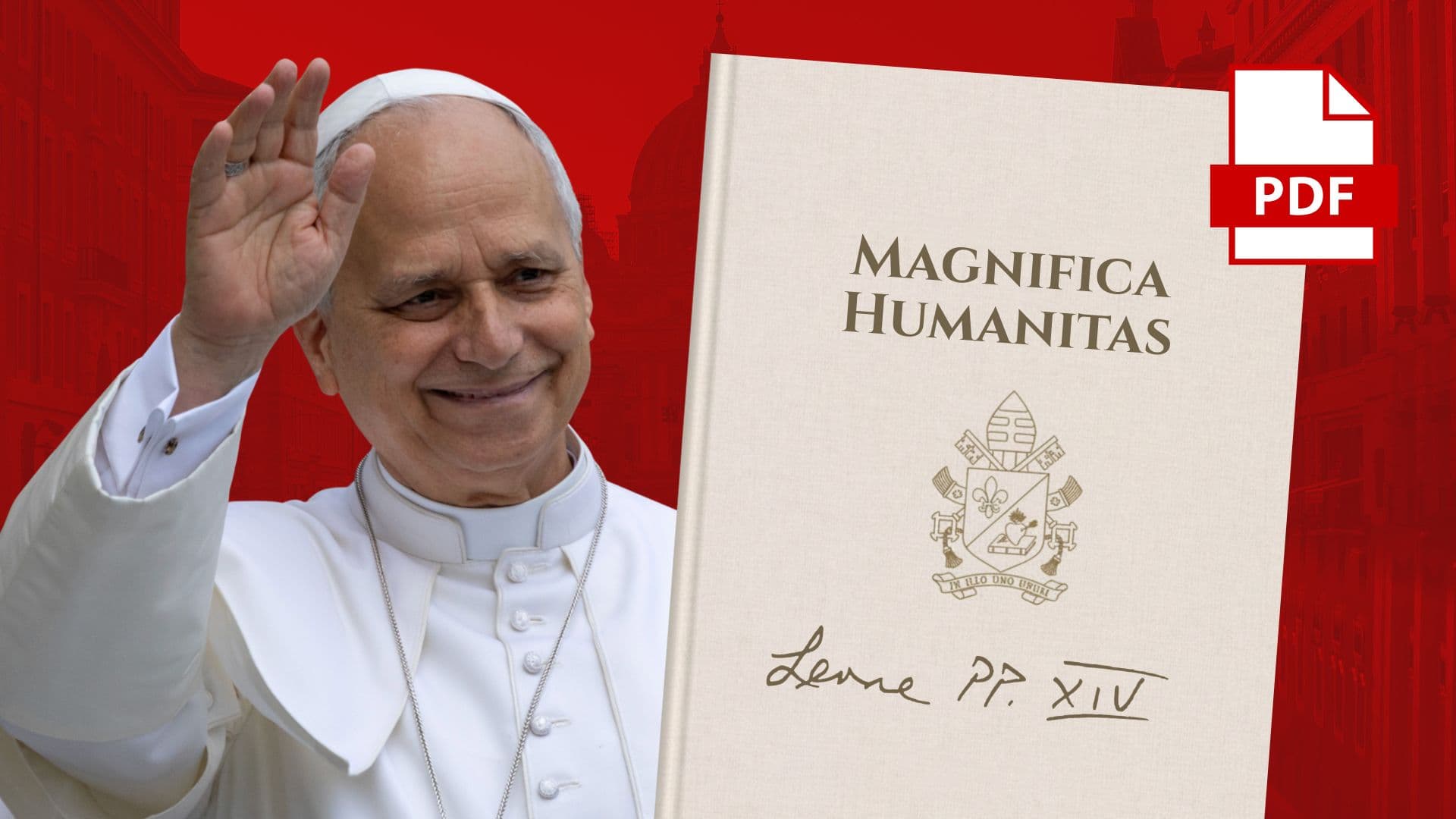 Cover of the Magnifica Humanitas encyclical, published by the Vatican on May 25, 2026
The starting point: technology is not neutral
Magnifica Humanitas is structured as an introduction, five chapters and a conclusion, totaling 245 paragraphs. The underlying premise appears right at the start: technology is not "a force antagonistic to humanity" (4), nor is it "inherently evil" (9). But the Pope is direct: "Technology is never neutral, because it takes on the characteristics of those who devise, finance, regulate, and use it."
That sentence undoes two lazy arguments that dominate public AI debate:
- The argument from awe "it's just a tool, it all depends on how you use it" which absolves the designer of the system.
- The argument from fear "AI is going to destroy everything" which paralyzes instead of asking for discernment.
The encyclical refuses both. Whoever designs, finances, trains and regulates an AI system imprints intent into it, even unconsciously. There is no exit through technical neutrality. There is, however, an exit through explicit responsibility.
"Disarming AI": the document's key concept
The encyclical's strongest word is just one: disarm. It carries deliberate weight:
To disarm means discrediting the assumption that technical power automatically confers the right to govern. To disarm does not mean rejecting technology, but preventing it from dominating humanity. (MH 110)
Leo XIV builds the parallel with nuclear energy: a technology that can light up cities or destroy them, depending on the logic in which it is embedded. AI, he argues, currently lives within three "armed" logics: military, economic, and cognitive the last being the most subtle, because it operates on people's critical-thinking capacity.
Disarming AI, therefore, does not mean halting it. It means pulling it out of a mentality of competition, domination and exclusion, and placing it at the service of the common good. The point is strategic, not technophobic.
The "technocratic paradigm" and what it hides
The third chapter Technology and Dominance. The Grandeur of Humanity in Light of the Promises of AI picks up a warning from Pope Francis: the technocratic paradigm. It is that mentality in which "every choice is dictated exclusively by the measurement of efficiency and profit" (92).
Leo XIV is sharp:
The most powerful technology is not necessarily the best. AI can imitate and simulate the person, but it does not possess moral conscience, empathy, or affective, relational or spiritual capacities.
There is a philosophical cut here that matters to the corporate world. Efficiency and profitability are real goods they are not being condemned. What the encyclical condemns is elevating them to the sole criterion of technological choice. When that happens, three dimensions that no language model captures are lost: moral judgment in the face of exceptions, empathy in the face of suffering, and the relational meaning of a conversation between persons.
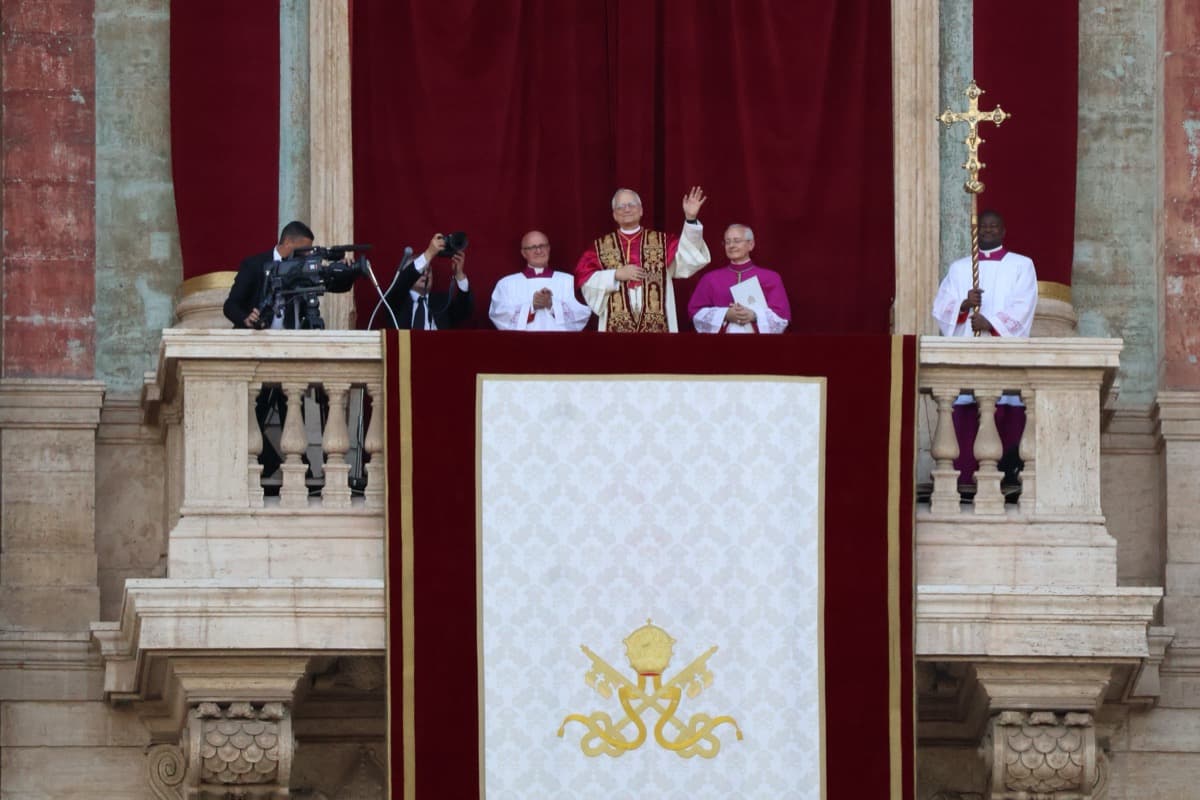 Pope Leo XIV on the loggia of St. Peter's Basilica after his election, May 8, 2025
The deeper danger: the person as a "project to be optimized"
Paragraph 112 contains perhaps the most uncomfortable sentence in the document for any company that operates with KPIs:
The deeper danger is that human beings may begin to see themselves and others as projects "to be optimized."
It is not a figure of speech. It is a precise description of what happens when an operation starts treating the customer as a variable in an objective function (average handle time, NPS, cost per contact) and the employee as a resource to be tuned to the speed of the machines.
Leo XIV specifically critiques transhumanism and posthumanism, currents that read progress as overcoming human limits. For the encyclical, "humanity flourishes not despite limitations, but often through them" (118). Tiredness, error, fragility, illness, old age none of these are defects to be eliminated. They are part of what makes someone worthy of unconditional respect.
The practical consequence for companies: an AI system may relieve what tires, but it cannot treat tiredness as a flaw in the human.
The dignity of work in the "fourth industrial revolution"
In the fourth chapter Safeguarding Humanity at a Time of Transformation. Truth, Work, Freedom the Pope addresses what is perhaps the most sensitive topic for B2B: what AI does to work.
The passage is blunt:
The "new ways" of working are not necessarily better. While AI promises to boost productivity by taking over mundane tasks, it frequently forces workers to adapt to the speed and demands of machines, rather than machines being designed to support those who work. (MH 150)
The inversion matters. Automation should be designed to support the human not the other way around. When a service representative spends an entire shift hitting average-handle-time targets that only make sense at bot scale, work has stopped being human: it has become an interface for the system.
The encyclical does not condemn automation. It condemns automation that cuts costs by eliminating jobs without offering a path. Technology can, in fact, free human beings from painful or repetitive tasks provided that liberation translates into more qualified, better-paid and more meaningful work, not into unemployment.
Truth, communication and the risk of the "architecture of visibility"
The encyclical calls for an ecology of communication grounded in truth. It is concerned with:
- Transparency in how content is selected
- Personal data protection
- Serious journalism, built on argumentation and verification
- The "proper and critical" use of digital tools
Leo XIV names the design of digital platforms that "amplifies only what is visible and shapes opinions" the "architecture of visibility." The warning applies to any company that adopts generative AI in customer communication: what the system chooses to show (and in what order) is not neutral it is an implicit editorial decision.
For the Pope, the massive collection of data and the use of algorithmic systems can become "a new form of power" (171) capable of discriminating against the most vulnerable. The defense is structural: education for critical use, independent oversight, clear legal frameworks.

What Magnifica Humanitas asks of those who build AI
Anyone reading the encyclical looking for a list of "prohibitions" walks away empty-handed. The text is, in fact, a plea for intentionality. The asks Leo XIV makes of developers and companies that use AI:
| Axis | Encyclical's request | Practical implication |
|---|---|---|
| Accountability | Clarity about who answers at each stage of the AI lifecycle | Logs, audit trails, traceability of automated decisions |
| Ethical code | Shared social-justice standards, not defined by a few (107) | Public usage policy, committees with real plurality |
| Oversight | Independent oversight of systems | Active human curation, not just "sample reviews" |
| Education | Training for "proper and critical" use of tools | Customer and employee training in healthy use |
| Sustainability | Do not overlook AI's environmental impact (energy, water) | Assess the ecological cost of each model deploy |
| Work | Person-centered systems, not performance-centered | Metrics that include relationship quality, not only volume |
The synthesis appears in paragraph 107: "a more moral AI is not enough if that morality is determined by a few." AI ethics is not a problem to be solved by big tech alone it is a social problem.
How we read this document at Tolky
We are a company that automates. We are a B2B conversational AI platform, and our daily work is to make customer service, sales and relationship management more efficient. That is why reading Magnifica Humanitas is, for us, not an academic exercise it is product raw material.
There is a comfortable cliché in the market: saying "technology replaces people" as if that were evidence of modernity. We reject that cliché. We believe well-built AI does not replace the human: it frees the human for what humans do best exceptions, empathy, judgment, creativity, negotiation, care.
When an AI resolves the twelfth duplicate-invoice request of the day in 30 seconds, it is not "eliminating a job." It is freeing that agent for the customer who is crying on the phone because his father died and the insurance denied the procedure. That customer needs a person.
The principles we apply
Concretely, we translate the encyclical's care into five product decisions:
1. Human handoff with context, not as a system failure
In our architecture, transferring a conversation to a human agent is not "the AI didn't make it." It is the AI doing the right thing. The orchestrator monitors signals frustration, complexity, value of the relationship, presence of a policy exception and escalates proactively, before the customer has to ask. The human agent receives a complete briefing: history, detected intent, actions already taken, reason for escalation. Average time for the human to become productive: a few seconds.
2. The machine adapts to the person, not the other way around
The sentence in MH 150 "machines must be designed to support those who work" is literal in our operator-panel design. Rhythm, priorities, queues and AI suggestions exist to reduce the agent's cognitive load, not to push them to the limit.
3. Measurable efficiency, but with human-quality metrics
We optimize first response time, deflection and cost per contact because those metrics matter to operations. But we always pair them with what the encyclical would call "social" metrics: CSAT segmented by interaction type, repeat-contact rate within 24h, post-handoff NPS, sentiment across the conversation. Efficiency is only good when it comes with relational quality.
4. Governance and audit as default, not as a paid add-on
The encyclical calls for independent oversight. In our ecosystem that translates into immutable history, audit logs, SSO, encryption, data residency aligned with regional regulation the same standards we already meet in operations such as CNJ and Volvo. Anyone using our platform knows who said what, when, against which knowledge base, and can review.
5. Limits where the human always decides
Not everything should be automated, even when it is technically possible. That is why our platform lets the customer design "human-mandatory" zones: types of request, customer profiles, value ranges, sensitive content. The AI prepares, but does not close. That explicit design is our reading of Leo XIV's request: to disarm AI is to decide, in each operation, where technical power must not replace human responsibility.
The question the encyclical hands back to every company
Near the end of the third chapter, Leo XIV writes: "The true alternative is not between enthusiasm and fear, but between two paths of development: a progress that serves individuals and peoples, or a progress that subjects them to the mentality of power" (129).
It is a demand. Anyone deploying AI in 2026 in customer service, sales, collections, HR, or anywhere in the operation has to answer: am I designing this system to serve the people who will touch it, or am I designing it to extract efficiency from them?
Magnifica Humanitas is a call to intentionality. It is not a manifesto against productivity. It is a reminder that productivity built on top of people who are treated as projects to be optimized destroys the hardest capital to rebuild: trust.
Humanity in all its grandeur and woundedness must never be replaced or surpassed. Technology can alleviate humanity's sufferings and open new possibilities, but it must not deny the essence of humanity, which is our "capacity for relationship and love." (MH 126)
In one sentence: the best AI is the one that amplifies what is best in people, not the one that tries to take their place. That is the product we are building.
Want to structure a conversational AI operation that scales without dehumanizing? Talk to our team together we map the right point between operational efficiency and respect for the person on the other side of the conversation.
Share
Tags
magnifica humanitas
pope leo xiv
encyclical
ai ethics
humanization
responsible ai
dignity of work
conversational ai
Marlos Carmo
Founder of Tolky
Marlos Carmo is an AI entrepreneur and founder of Tolky, the conversational-era infrastructure and AI CRM that unifies intelligent service, multi-channel support (such as WhatsApp and voice), live CRM, and operational intelligence in a single ecosystem. He is a finalist for the SXSW Innovation Awards and a member of Francesco's Economy, a global network of young entrepreneurs focused on innovation and social impact. He works connecting Artificial Intelligence and digital transformation in projects for large organizations.
Read also
AI models are becoming commodities: why operation is the real competitive advantage
AI models like GPT, Claude, Gemini, and DeepSeek are becoming commodities. The true competitive edge for mature enterprises is not the chosen LLM, but the operational architecture built on top of it.
Marlos Carmo
July 23, 2026
·
16 min read
Guides
Behind the Scenes of Conversational AI at Scale: What Powers Millions of B2B Interactions
Scaling Conversational AI isn't just about choosing a model. Understand the infrastructure, tickets, management, and governance behind millions of conversations.
Marlos Carmo
June 22, 2026
·
14 min read
Strategy
AI Governance in Customer Service: How to Scale Conversations with Control, Security, and Quality
Quick replies are not enough. Learn how to implement AI governance to mitigate risks, integrate with CRM/ERP, and gain complete control over your operation.
Marlos Carmo
June 18, 2026
·
20 min read
Strategy
AI-Powered Contact Center: From Disconnected Channels to Smart Relationship Operations
An AI-powered contact center goes beyond faster replies. Learn how to unify channels, tickets, automation, and humans into a single smart relationship operation.
Marlos Carmo
June 12, 2026
·
18 min read
Guides