
Blog
Guides
Conversational AI vs. Traditional Chatbot: What Changed in 2026?
Why old customer service robots frustrated customers so much and how true Conversational AI is enabling complex resolutions in seconds.

Marlos Carmo
June 6, 2026
·
7 min read
TL;DR
For years, the word 'chatbot' was associated with rigid, frustrating numerical menu experiences. The traditional chatbot operated based on closed decision trees. In 2026, **Conversational AI** (powered by LLMs and Autonomous Agents) has completely replaced that model. It understands intent and sentiment, reasons about complex problems, processes voice messages, and interacts with enterprise APIs to execute actions (such as refunds and sales) in a humanized, zero-human-intervention way.
Share
If you ask a consumer today what their biggest frustration is when trying to talk to a company, the answer will very likely involve the phrase: "I hate getting stuck in those bots that don't understand anything."
For a long time, companies adopted the famous "Chatbots" in an attempt to reduce support costs. But what they managed to do, in most cases, was transfer the bottleneck: instead of waiting 30 minutes in a phone queue, the customer ended up stuck in an infinite loop of useless automatic responses on WhatsApp.
However, the technological leap witnessed between 2024 and 2026 completely rewrote the rules of the game. The "menu chatbot" category is technically dead in large corporations. It has been replaced by something infinitely more intelligent and capable: Conversational Artificial Intelligence.
In this definitive article, we will dissect what has structurally changed in this transition, the cruel limitations of the old technological guard, and how the New Era is delivering conversion and satisfaction (CSAT) levels that even surpass average human service.
The Beginning: How the Traditional Chatbot Worked (Rules-Based Bot)
To understand the innovation, we need to look at the structural limitations of legacy software. Traditional chatbots, which dominated the corporate market until mid-2024, were built under the Decision Tree paradigm.
The premise was rigid. A programmer needed to manually map all possible routes of a conversation. If the customer typed "A," the machine responded "B."
How the experience flowed (or stalled):
- The bot sent a numbered menu: "1 for Sales, 2 for Support, 3 for Finance."
- It worked based on exact keywords. If the configured word was "Invoice," and the user typed "Send me this month's bill," the bot didn't find the keyword and responded: "Sorry, I didn't understand what you meant. Type 1 for Sales..."
- Zero context retention: if you went back to the main menu, the bot forgot everything you had just entered.
This rigidity created the phenomenon consultants call the Operational Dead End. For minimal and generic problems (FAQ), the chatbot worked. But for any nuance: an outraged customer wanting to cancel a purchase that was delayed because the carrier got the address wrong, the chatbot was just a barrier that inflamed the customer's anger before finally transferring the ticket to the human agent.
The promise of reducing operational costs proved false. The "Support Cost" was still there, because the escape rate to human service (Handoff) was enormous.
The Turning Point: The Rise of Conversational AI
The year 2026 crystallized a new technological reality. Driven by the maturation of Large Language Models (LLMs) and the orchestration of Autonomous Agents (Agentic AI), Conversational AI is no longer just a "keyword bot." It is digital cognition applied to business.
The fundamental structural difference is that Conversational AI has no pre-programmed routes and requires no buttons. The technology engine is Natural Language Processing (NLP) in its purest and deepest form.
How Conversational AI Processes the World:
When a customer sends a voice message saying "I bought the white refrigerator yesterday morning, but my wife wants the silver one. Can you exchange it before invoicing? Delivery is for the 10th," modern Conversational AI doesn't look for the word "refrigerator" in a list.
- Semantic Intent Recognition: The AI understands the hidden meaning. It understands that "refrigerator" is an order, "yesterday" crosses with the issue date in the database, and "wife wants the silver one" is a formal request to change an uninvoiced order.
- Contextualization with the ERP (Database): The Agent goes to the management system, checks whether the stainless steel refrigerator is in stock, and verifies the invoice dispatch status.
- Autonomous Resolution: If business rules (Guardrails) allow, the Agent responds immediately: "Hi João! I can do that. The stainless steel refrigerator costs R$ 200 more. I can generate a payment link for the difference and update the delivery to the 10th with no delays. Sound good?"
And all of this without any human in your operation touching the keyboard. This level of cognition did not exist in "traditional chatbots."
What Effectively Changed in Corporate Practice in 2026?
The change left the Silicon Valley laboratories and reached the trenches of service and sales. The biggest paradigm breaks the market has established are:
The End of Menus and the Rise of Free-Text
Your company no longer forces the user to adapt to your department hierarchy. The user uses their own language (including slang, bizarre grammatical errors, and rushed voice messages recorded in the car). The AI is fluent in "unstructured human language."
Historical Awareness and Living Memory
The traditional chatbot had no memory. Conversational AI in 2026 uses vector databases that ensure it remembers you. If a customer calls support, the AI Agent reads the company's Conversational CRM, sees that the customer is VIP (long-time buyer), analyzes that in the last purchase they rated NPS a 6 because the packaging arrived dented, and personalizes the greeting based on all this context. The personalization is extraordinary and in real time.
Transactional Execution Through Agents (Agentic Workflows)
Answering questions is the basic level. The advanced level (which dominates the market in 2026) is AI that executes work. The old chatbot would only say "The cancellation rules are at website XYZ." Modern AI accesses the API of your financial subscription system, authenticates the user, cancels the plan on demand, refunds unused days, and confirms on WhatsApp. This is called goal-oriented AI.
Orchestration and Emotional Routing
AI can analyze the customer's sentiment line by line. If the customer starts escalating their tone of voice, uses words indicating aggressive anger, or threatens legal action ("consumer protection agency"), the Agent detects the emotional peak and immediately transfers to the senior human Crisis team, already with an AI-generated summary (TL;DR) so the human can resolve quickly, without the customer having to explain the problem again.
The New Era of Conversational Infrastructure: The Tolky Model
All this conceptual evolution needs a physical place to exist within companies. This is exactly what differentiates limited platforms from a true corporate technology ecosystem.
Tolky's vision as a platform is that Artificial Intelligence should not be a technological "add-on" or a plugin you attach to old service software. AI is now the fundamental layer of the entire business.
Why Tolky's architecture is the answer for 2026:
- Integrated AI CRM: Unlike the legacy model, where the chatbot was in one software and the customer system in another, Tolky integrates the conversation and CRM in the same core. The AI reads WhatsApp but automatically updates the sales pipeline.
- Multi-Agent Orchestration: You don't create "a chatbot." You orchestrate specialized agents (a high-performance sales SDR conversing perfectly with a dense technical support Agent).
- Active Operational Intelligence (Alerts): The platform doesn't wait for you to ask what's wrong. It scans your operation through background artificial intelligence and generates organic alerts saying: "Your response time increased 22% on Tuesdays in the sales sector. Do you want to increase the AI automation level on this day?"
Conclusion: Invisible Costs vs. Absolute ROI
Keeping a rules-based chatbot with limited capabilities running today is not just a "technological lag"; it is a severe risk to your market reputation and your operation's finances. Every second your customer spends frustrated screaming at a rigid "decision tree" in your WhatsApp service center, your brand bleeds retention.
Conversational AI has stopped being an experimental laboratory trend and has become the new floor of consumer market expectations. The user has already gotten used to conversing with the world's most intelligent AIs on their phones; when they open your company's corporate WhatsApp, they no longer have the patience to "press 1."
Your operation needs to jump from the old guard to modern conversational infrastructure. The gap is large, but the transition has never been more necessary (and more fluid). Talk to Tolky's specialists, discover the power of a platform built from scratch for the age of autonomous intelligence, and prepare your company for the future of relationship at scale.
Share
Cited in
Marlos Carmo
Founder of Tolky
Marlos Carmo is an AI entrepreneur and founder of Tolky, the conversational-era infrastructure and AI CRM that unifies intelligent service, multi-channel support (such as WhatsApp and voice), live CRM, and operational intelligence in a single ecosystem. He is a finalist for the SXSW Innovation Awards and a member of Francesco's Economy, a global network of young entrepreneurs focused on innovation and social impact. He works connecting Artificial Intelligence and digital transformation in projects for large organizations.
Read also
What Is an AI Agent? The Definitive Guide to Autonomous Agents (2026)
Discover what an Artificial Intelligence Agent (Agentic AI) is, how it differs from traditional chatbots, its architecture, and how companies are using Autonomous Agents to scale corporate operations.
Marlos Carmo
June 6, 2026
·
8 min read
Artificial Intelligence
How Conversational AI Integration with Legacy Systems Works (CRM, ERP, APIs)
Discover the engineering behind Autonomous AI Agents: how Language Models (LLMs) communicate in real time with legacy CRMs and ERPs through corporate APIs.
Marlos Carmo
June 6, 2026
·
7 min read
Engineering
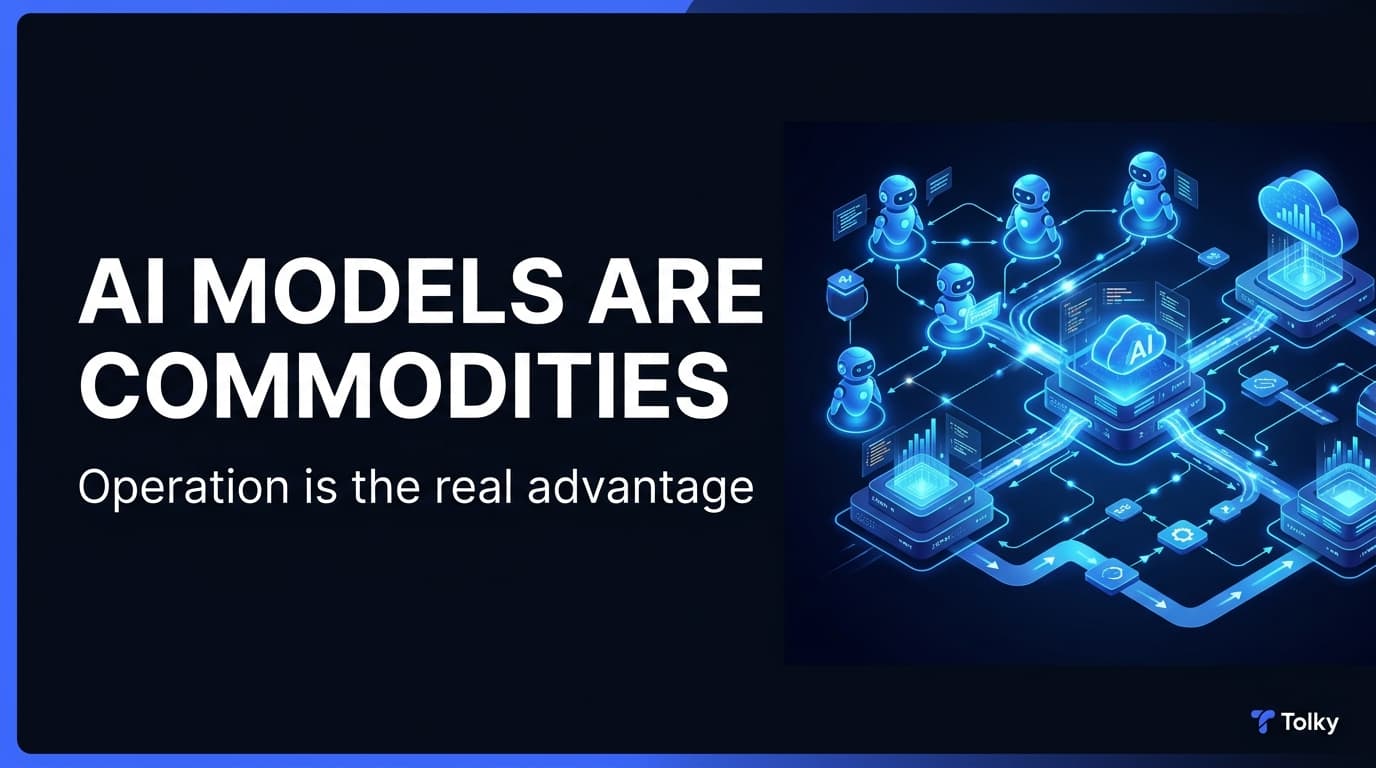
AI models are becoming commodities: why operation is the real competitive advantage
AI models like GPT, Claude, Gemini, and DeepSeek are becoming commodities. The true competitive edge for mature enterprises is not the chosen LLM, but the operational architecture built on top of it.
Marlos Carmo
July 23, 2026
·
16 min read
Guides
What Is Conversational CRM? Difference Between Omnichannel CRM, Chatbot, and AI
Understand what a Conversational CRM is, how it overcomes the limitations of traditional CRM (Omnichannel), and why the transition from rigid chatbots to Conversational AI is redefining sales.
Marlos Carmo
June 6, 2026
·
7 min read
Guides